Forging a multi-channel commercial bid pipeline
How Fabrica Construction replaced seasonal lead dependence with a qualified opportunity system built for commercial bids.
The growth pattern
Fabrica Construction had a capable delivery team and a credible body of work, but new opportunities arrived unevenly. One source could produce a busy quarter and then disappear. Referrals, tender portals, property relationships, and past-client demand were all present, yet they behaved like separate streams rather than one commercial system.
The real constraint
The company did not need more unqualified leads. It needed a reliable way to decide which opportunities deserved estimating time, how each channel performed, and what future workload the current pipeline could support. Without that structure, the team risked overinvesting in weak bids while missing the early signals of a future revenue gap.
The system we forged
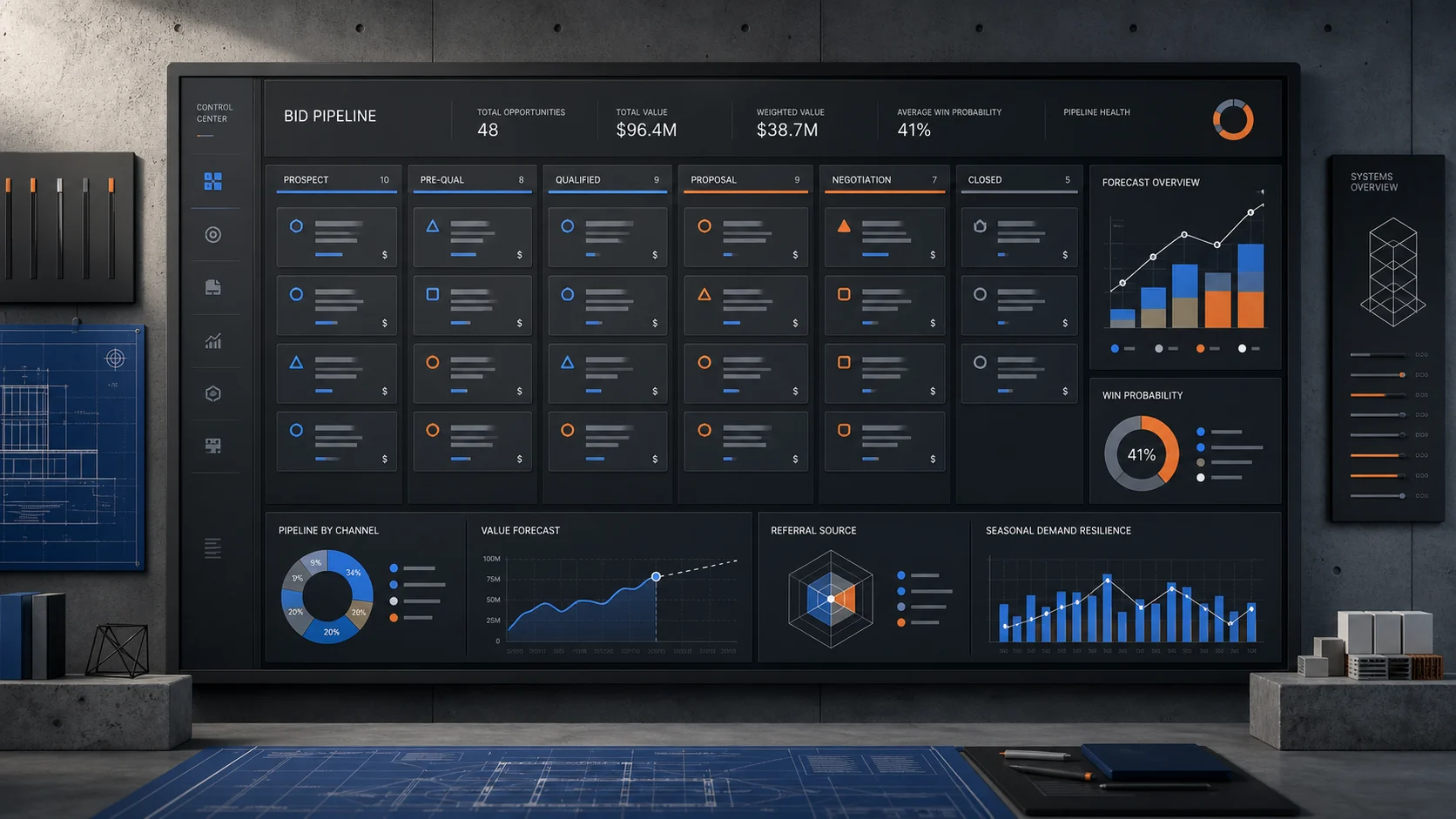
We designed a common opportunity model across every acquisition channel.
- A pre-qualification score covers project fit, buying authority, timing, delivery capacity, and commercial risk.
- The pipeline separates prospecting, pre-qualification, qualified opportunity, proposal, negotiation, and award.
- Channel attribution follows opportunities through to awarded value rather than stopping at lead volume.
- A weighted forecast translates live bids into a realistic view of future workload.
- Seasonal resilience reporting shows when one channel or project type is carrying too much of the plan.
- Referral prompts reconnect completed projects to consultants, developers, and client networks.
Adoption in the field
The workflow was designed around the meetings Fabrica already held. Estimators do not maintain a second reporting system; core bid information feeds the commercial view. Leaders can review exceptions and decisions instead of reconstructing the pipeline from email threads and spreadsheets.
The durable advantage
Fabrica can now see demand before it becomes workload. The business has a shared language for opportunity quality, a clearer basis for allocating estimating effort, and a portfolio of channels that can be strengthened deliberately. Growth becomes an engineered pipeline rather than a sequence of busy and quiet seasons.