How We Launch Websites in 2 Weeks (Without Cutting Corners)
A two-week website launch is possible when decisions, content, design, and engineering move as one disciplined system.
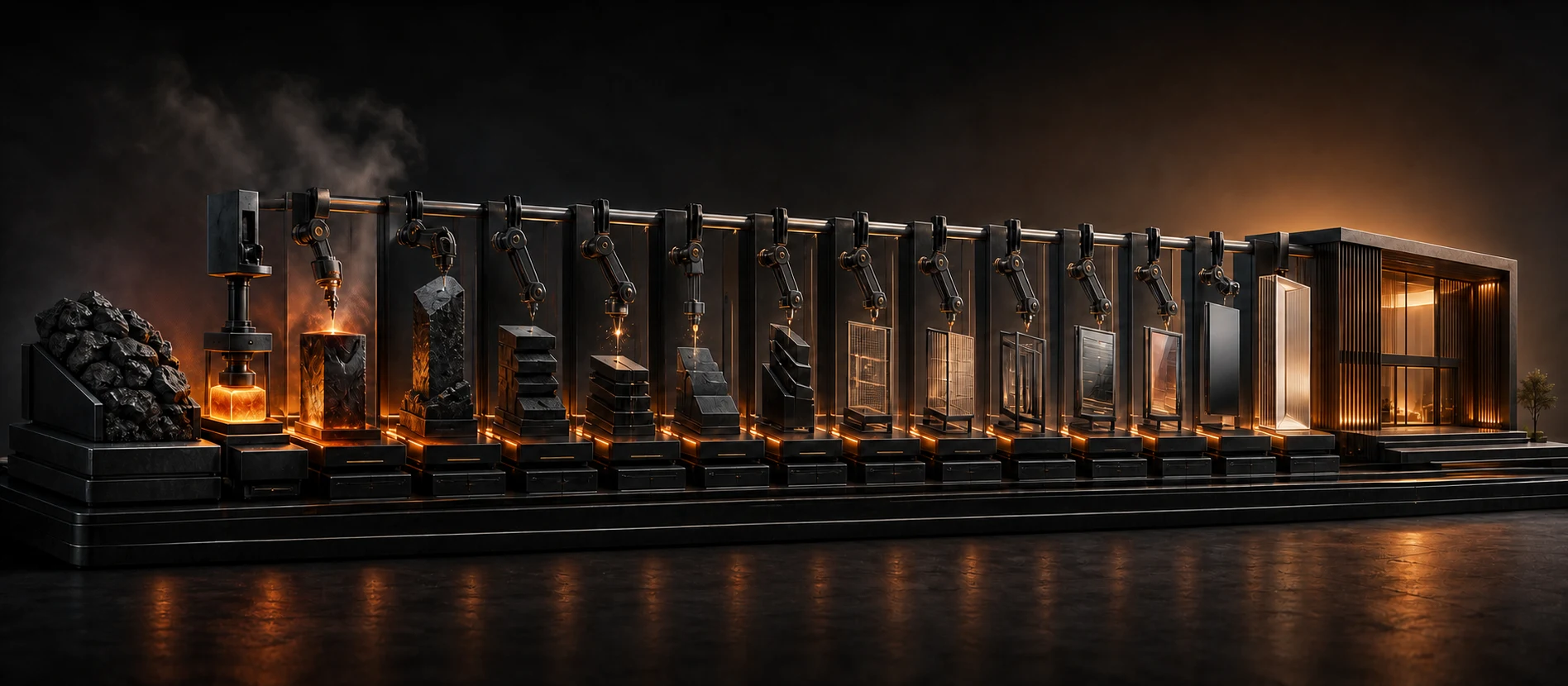
A two-week website launch sounds like one of two things: a template with the logo changed, or a team quietly planning to skip strategy, accessibility, testing, and sleep.
That is not how we work.
At theForge, speed comes from removing waiting, ambiguity, and unnecessary handoffs. We do not try to compress an undefined six-month project into ten working days. We shape the engagement so the most important website can be decided, designed, built, tested, and released as one focused production cycle.
Fast delivery is not rushed delivery. It is delivery with fewer queues.
First, a two-week launch is not right for every project
The format works best for focused marketing sites, campaign sites, early product sites, professional-service websites, and redesigns with a clear commercial objective.
It is not the right promise for a large content migration, a multilingual estate, a marketplace, a complex authenticated application, or an organisation that needs several weeks to approve one headline.
Before the cycle starts, we establish four conditions:
- One accountable decision-maker.
- A defined primary audience and business outcome.
- A controlled page and integration scope.
- Access to the people, content, systems, and credentials required to launch.
If those conditions are missing, the honest move is to change the plan—not pretend the calendar will create alignment.
Before day one: remove preventable uncertainty
The most important work begins before the sprint clock starts. We use a short readiness phase to collect existing analytics, brand assets, customer evidence, service information, domain access, technical constraints, and stakeholder input.
We also agree what “launched” means. The acceptance criteria cover content, responsive behaviour, forms, analytics, search foundations, performance, accessibility, integrations, redirects, and ownership after release.
This prevents the final day from becoming a debate about requirements nobody documented.
Days one and two: strategy, message, and architecture
We start with the commercial journey, not the moodboard.
The team aligns on:
- The audience the site must move.
- The problem that creates urgency.
- The offer and the valuable outcome.
- The proof required to reduce risk.
- The primary conversion and operational handoff.
- The minimum page architecture needed to tell that story.
By the end of this phase, the site has a message spine and a content map. Every page has a job. Every section supports a question or decision. Anything that does not serve the launch objective moves out of scope or into a later release.
Days three and four: design the system, then the pages
We do not design every page as an isolated composition. We establish a small visual system: typography, colour roles, spacing, grid, buttons, forms, cards, media treatment, navigation, and recurring content patterns.
Then we apply the system to the highest-risk screens first. The homepage matters, but so do the service detail, conversion path, mobile navigation, and any page where complex information must become clear.
Real content is used as early as possible. Placeholder copy hides hierarchy problems and delays decisions. Designing with the actual offer, proof, objections, and calls to action exposes what the system needs to handle.
Days four to eight: design, content, and engineering move together
This overlap is the core advantage.
Engineering begins as soon as the foundations are stable. Content is refined inside real components. Design resolves new states as implementation reveals them. Analytics, forms, CMS structure, metadata, and integrations are built alongside the visible interface rather than left for a final checklist.
Parallel work succeeds because ownership is clear. It fails when everyone edits everything, so each decision has a responsible person and a short review window.
We also use proven foundations for concerns that should not be reinvented on every project: responsive layout, accessibility patterns, content modelling, deployment, monitoring, image handling, form validation, and technical SEO. Reuse gives the team more time for the parts that should be unique—the offer, story, brand expression, and customer experience.
Days eight and nine: test the journeys, not just the pages
Quality assurance is continuous, but the final test phase follows real tasks:
- Can a new visitor understand the offer?
- Can the right buyer find the evidence they need?
- Can someone complete the primary action on mobile?
- Does the enquiry arrive with the right context?
- Do confirmation, notification, CRM, and analytics events work?
- Do redirects, metadata, social previews, and error states behave correctly?
We test content, interaction, accessibility, performance, and operations together because a form that looks perfect but sends nowhere is not finished.
Day ten: launch is a controlled change
Launch has an owner, a sequence, and a rollback path. Domains, DNS, environment variables, redirects, analytics, monitoring, and backups are confirmed before the switch.
After release, we run production checks and watch the first real journeys. The site then enters a measured improvement cycle. A two-week launch is the beginning of learning, not the end of responsibility.
What we refuse to cut
The schedule is short, but several standards are not negotiable:
- Clear positioning and conversion logic.
- Responsive design across real breakpoints.
- Accessible structure and interaction.
- Performance-conscious implementation.
- Search and social metadata foundations.
- Secure, validated forms and integrations.
- Analytics tied to meaningful actions.
- Content and operational ownership after launch.
We protect those standards by cutting indecision, speculative features, duplicate pages, approval theatre, and work that does not support the objective.
The real product is momentum with integrity
A long timeline can hide uncertainty. A focused one forces decisions into the open.
Two weeks works when the business is available, the scope is shaped, the system is proven, and the team collaborates in real time. The result is not every website the organisation might ever need. It is the strongest useful website it can launch now—built well enough to learn from and extend without starting again.